
New Mexico Arrests Start Locally
No statewide portal gathers every New Mexico booking. Each arrest record starts with the agency that made the arrest. But the receiving county or municipal detention center builds the booking record and controls its custody view. A city arrest can land in a county jail. State Police releases tell a different story. A New Mexico State Police release can describe an arrest without showing the jail entry, booking photo, bond, or release time. These sources answer different questions. A name in a news release is a lead to verify, not a roster result.
The timelines differ too. A current-custody list drops people once they are released. A booking-date query can keep the entry visible long after the person has left. Court portals show later case outcomes. The New Mexico Corrections Department covers prison custody and supervision. Adding these feeds never yields a statewide total. Counties use different windows, record transfers unevenly, and not all publish a web roster.
A booking means a facility processed someone into custody. It may follow a street arrest, a warrant surrender, or a transfer from another agency. Read the label, the booking date, and the court result separately.
County Feeds and Arrest Rosters
Start with the official detention page for the county where the arrest occurred. Larger New Mexico systems vary widely. Some offer a current roster, a booking-date search, or separate arrest and release lists. Others post only a dated PDF, an office phone route, or an IPRA request. The statewide pattern is mixed. A searchable portal in one county guarantees nothing about its neighbor.
Bernalillo County's MDC separates custody, arrest, and release pages. Doña Ana County's inmate application offers booking number and date tools. San Juan County goes deeper. Its inquiry allows booking-date ranges and can expose charges, bond, docket, and arresting agency. Santa Fe County has a current lookup plus a calendar-day booking report. Colfax County posts dated roster PDFs. These are representative official sources, not a list of all New Mexico arrests.
Many rural counties publish no roster at all. There, use the county's detention or sheriff page. Ask the records custodian for the booking record directly. A missing roster never means no arrest happened. The record usually exists; it simply is not online.
New Mexico Search Windows
Every New Mexico arrest view carries its own date label. Read it first. "Current custody" is a status snapshot. "Arrest list" covers recent events, no defined day. A date-filtered booking report follows the calendar dates you choose, and a newspaper jail log runs on its own publication schedule.
| Record channel | Photo / record scope | Window and access limit |
|---|---|---|
| County arrest or current roster, such as Bernalillo MDC, Doña Ana, or Eddy | Official booking or current custody fields; photographs vary by facility and entry. | Some counties separate arrest, custody, and release views. No common statewide update clock applies. |
| Same-day candidates, including San Juan’s date filter | Recent booking dates or selected arrest entries; photo display is not guaranteed. | A date filter or arrest list is not a promise of a rolling day. The statewide routing page is Arrests Last 24 Hours. |
| Multi-day logs, including the Santa Fe report and local newspaper jail logs | Calendar-date entries, selected blotter events, or dated snapshots. | Publication can lag or omit events; the statewide archive and blotter landscape is separate from a current roster. |
| DPS and New Mexico State Police releases | Official reports about selected operations, arrests, and investigations; not a complete booking source. | Event-driven releases have no same-day roster promise. |
| New Mexico Courts | Public case filings and later outcomes, not county booking photos. | Case Lookup omits some documents and juvenile cases; ask the clerk for the official record. |
| NMCD offender search | State prison and supervision records; a profile may show an offender photo. | Not a county jail feed; prison data is updated nightly and can lag a move. |
| BOP and ICE | Separate federal or immigration custody systems; BOP does not provide a general booking-photo source. | Neither system replaces a New Mexico county roster or court file. |
| RecentlyBooked, Mugshots.com, and other publisher state pages | Secondary copies may include arrest dates, charges, and photos. | Coverage is partial, unofficial, and may be stale or difficult to correct. |
A fresh arrest does not always appear at once. Intake, identity checks, classification, data entry, and release review all happen locally. Quick releases complicate things. Someone cited instead of booked may never hit a custody roster. Need an urgent custody answer? Call the receiving facility or arresting agency. Use the contact details on its official site.
What New Mexico Booking Records Show
The receiving detention facility creates the booking record at intake. Fields vary by vendor and local policy. A visible entry may show a name, booking number, booking and arrest dates, arresting agency, custody status, charge text, bond, release date, and a booking photograph when one is attached and lawfully displayed. Some systems add aliases or prior booking entries. Others tuck charge details into a separate report. A few omit the photograph entirely.
| Field | What it can tell you |
|---|---|
| Name and booking number | The identity label and facility record key; a name match alone is not proof that two entries refer to the same person. |
| Booking or arrest date | When the facility processed intake or when the source attributes the arrest; the two times can differ. |
| Arresting agency | The department that brought the person into custody, not necessarily the jail that holds the record. |
| Charge or hold | The charge or legal basis entered at that stage; a booking label is not a court finding. |
| Bond and court data | A posted amount or linked case field when that system publishes it; verify current terms with the court. |
| Custody, housing, release | A snapshot of where the person was or when the record shows release; it may change after transfer. |
| Booking photograph | An image created during intake when the facility takes and attaches one; state law does not require universal web publication. |
The state repository is a separate record layer. The Department of Public Safety Law Enforcement Records Bureau holds fingerprint-based information within its stated scope. The local jail keeps the booking sheet and intake photo. Want your own repository record? The bureau's identity-verified process handles that. It is not a public search of every county booking, and a state history result is never a live jail status.
Note: Field labels come from the agency’s own system, so an arrest date and booking date may refer to different events.
New Mexico Mugshot Policies
No statewide rule in New Mexico makes every law-enforcement agency post booking photos online. Each county does things its own way. Bernalillo, Doña Ana, Eddy, San Juan, and Santa Fe each run their own rosters. Vendor-hosted rosters differ too. Displays and record fields vary across all of them. A mugshot may be missing because it was never attached. The page might need a detail view. Or the source restricts it. Fill a gap with another publisher’s copy? Never. Go back to the agency that made the arrest.
The public-facing NMCD offender search covers people in state prison or on probation or parole. A profile may show a photo. It is not a county jail roster. It does not report every fresh arrest. The Bureau of Prisons locator and an ICE detention lookup cover different federal custody systems entirely. None of them is a general New Mexico booking-photo collection.
Treat a secondary publisher’s photo or charge as a lead, nothing more. Return to the sheriff, the detention center, the arresting agency, or the court. A copied image can be old, mismatched, or missing a later update. The page below links to the official NMCD search itself. It does not link to a photo file. The agency keeps control of any profile result.
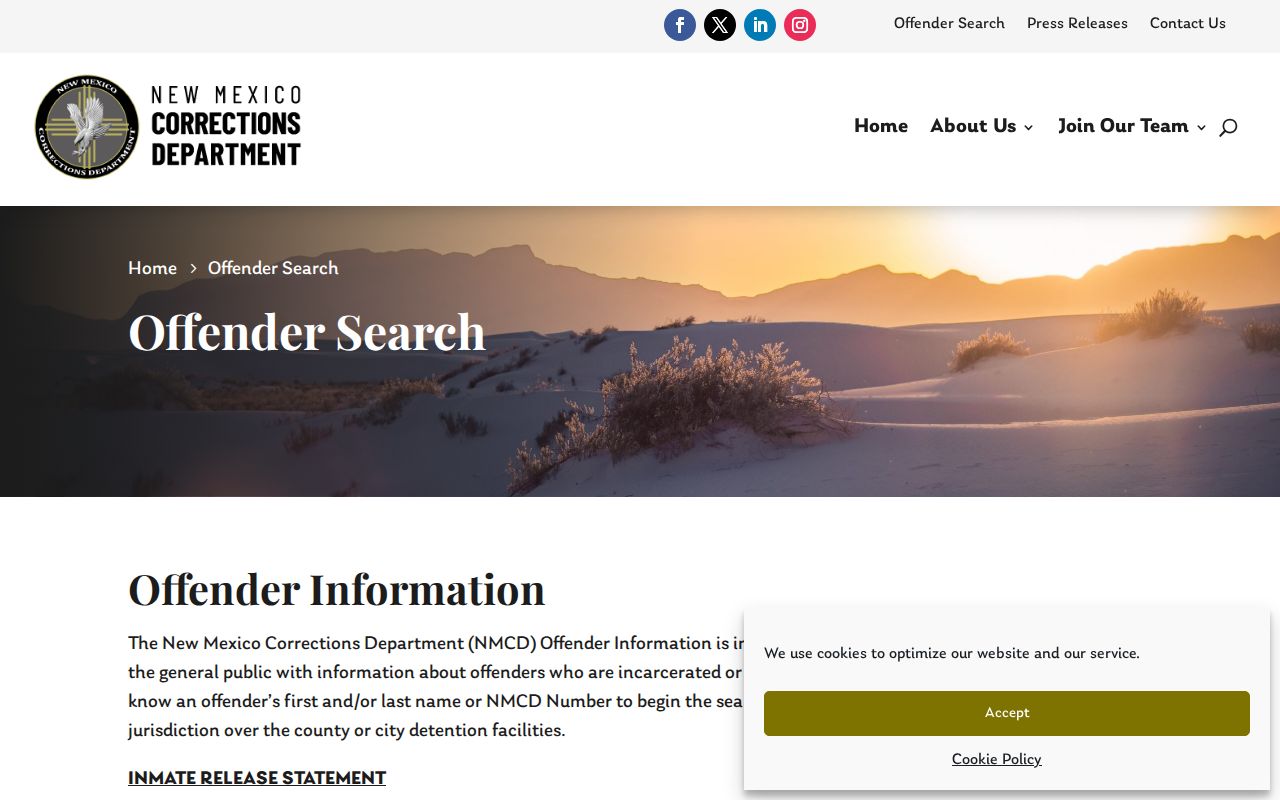
The New Mexico Corrections Department offender-search page explains this separate state-custody layer. The image there shows the agency’s search landing page. No named person’s profile appears.
New Mexico’s Children’s Code sharply limits public juvenile records and local detention files. Never publish or use a child’s name, photograph, or indirect identifying details as an arrest result.
Note: An absent image can reflect a local display choice, a missing attachment, a restricted record, or an interface that hides detail.
Request New Mexico Arrest Records
A roster can be missing, expired, or too narrow. When that happens, ask the office that holds the record. A jail request should name the receiving facility. It should ask for the booking sheet, booking number, and arrest and booking dates. Also request the released charge or hold information, bond, release date, and photograph if it is public. The arresting agency may hold the incident report, supplements, dispatch record, or video. The court clerk holds filings and disposition records. A specific request gets processed faster than a demand for everything about a person.
IPRA requests must describe the records with reasonable particularity. That rule covers public records held by a New Mexico agency. A requester usually does not need to explain why. Inspection is free. Copying or storage charges may apply. Agencies should respond immediately or as soon as practicable. No response should come later than fifteen calendar days. If a response cannot come within three business days, the custodian should say when to expect one. Electronic delivery can avoid physical-copy charges when it is available.
- Choose the custodian: receiving jail for booking and custody, arresting agency for the event file, court for case documents, or NMCD for state custody and supervision.
- Give the county, agency, date range, time zone, record type, and any known case or booking number. Ask for electronic copies and segregable non-exempt parts.
- Ask for an estimate if review will take time. If material is denied, request the exact legal basis and the category withheld.
- Keep the request, acknowledgment, any invoice, and the response together. A reply from one agency does not replace a request to another record holder.
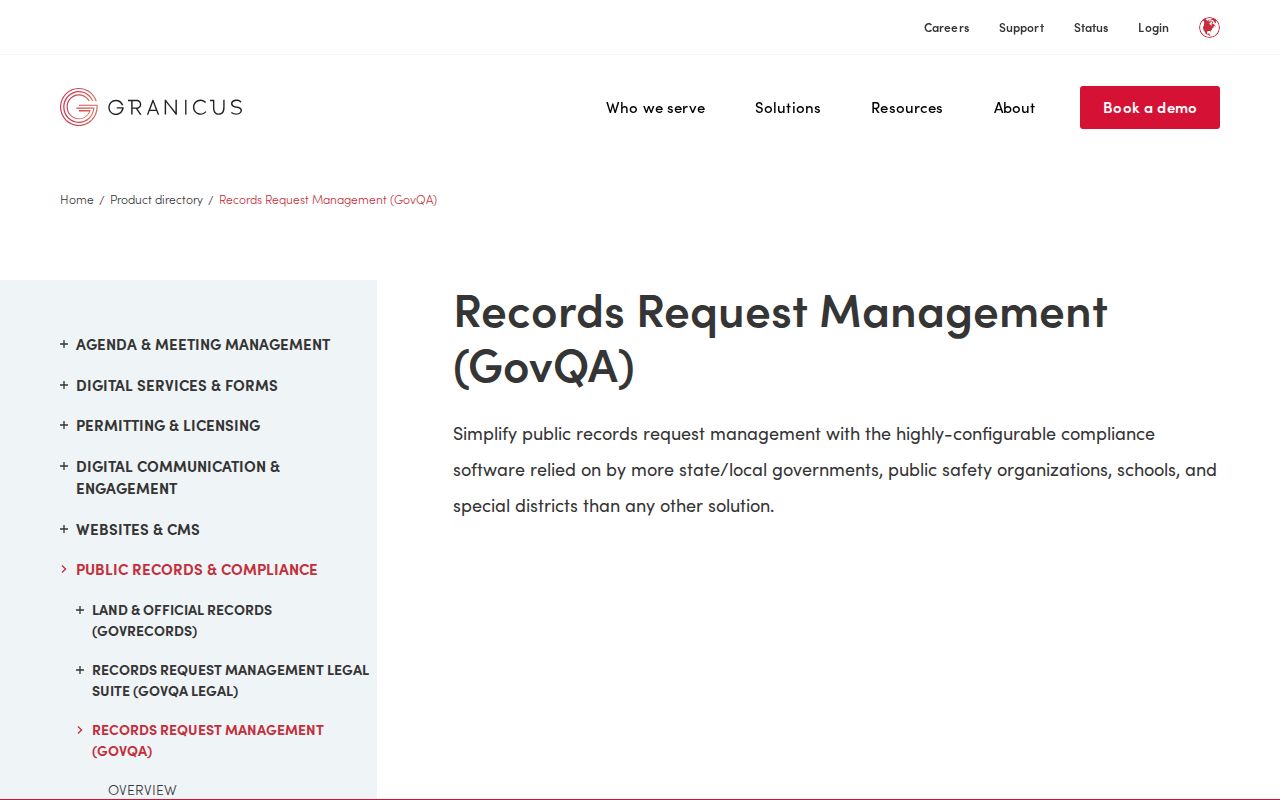
DPS routes state-police public-record requests through its GovQA/IPRA portal. That link opens the request-management platform itself. It is not a finished New Mexico request or a copy of any record.
The DPS Law Enforcement Records Bureau describes a separate identity-verified route under ARIA. It serves a person’s own state repository check. Its current instructions call for a notarized release form. They also require a $15 money order or cashier’s check. That fee does not apply to an ordinary county IPRA request. DPS also lists physical-copy fees. Examples include $1 for the first page and 25 cents for each later page. A disc costs $6.75. Confirm costs before sending payment.
New Mexico Law and Arrest Blotters
Two laws shape access to New Mexico records. One is the Arrest Record Information Act, or ARIA. The other is the Inspection of Public Records Act, or IPRA. ARIA names its public categories. They include wanted or fugitive lists, original chronological police blotters, public court proceedings, traffic material, and anonymized statistics. It also allows public arrest information tied to an adult currently within the criminal-justice system. Still, the law creates no single state-run booking site. And it requires no agency to publish every photo online.
ARIA's confidentiality rule is narrower than a blanket claim that all uncharged arrest information is secret. It protects details that reveal confidential sources or methods. It also protects certain information about an accused person who was not charged. That protection applies when it appears in records about a charged person. Other IPRA limits can apply. If an agency withholds a record, ask it to cite the specific legal provision. Then ask it to release any non-exempt part that can be separated.
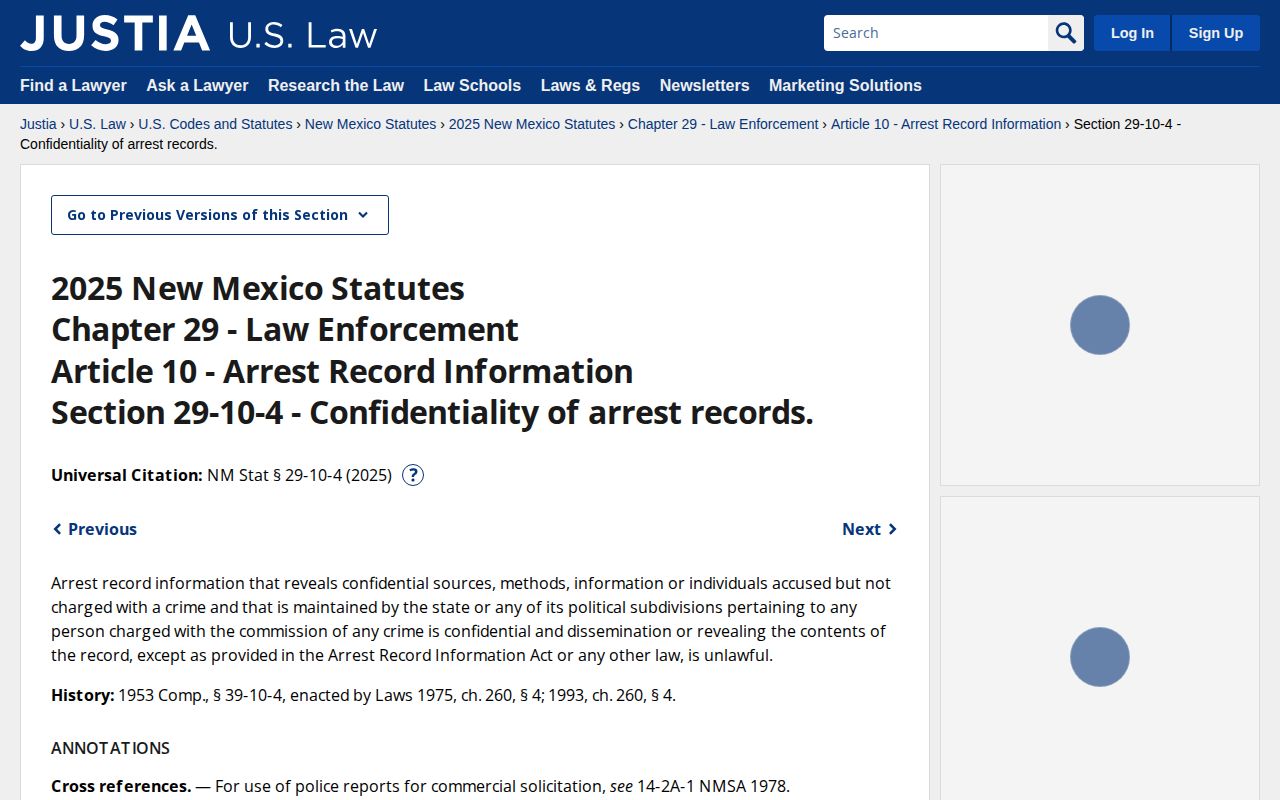
The text of ARIA §29-10-4 shows the limited confidentiality language. Read it alongside the public categories in §29-10-7 rather than treating one section as the whole rule.
Juvenile records get separate strong protection. The Children’s Code treats records about a child, including local detention material, as confidential apart from authorized access. Juvenile criminal court records are also excluded from the public case interface. A public blotter category does not override those limits.
Expungement and Booking Photos
New Mexico's expungement statute takes a broad view of arrest records. Booking sheets, fingerprints, and photographs all count. A person with a qualifying outcome can petition to clear those records. Some convictions qualify too, once the sentence ends and a waiting period passes. Charge category, pending matters, exclusions, and elapsed time all shape eligibility. After a court enters an order, the statute bars release of the covered government records, subject to the court's own authority.
Expungement is never automatic. Release without a conviction can support a petition after the statutory wait. Conviction-based relief works differently. Its waiting periods are offense-specific, and some crimes are excluded outright. New Mexico also offers a limited automatic track for eligible cannabis-only records. Juvenile adjudications and mixed records follow separate rules. A court or lawyer should confirm eligibility before anyone relies on a general description.
Because photographs sit inside the act's definition, an order can reach an official booking photo. Private publishers are different. A site may keep its own copy. A requester may need to send the court order to each source, then ask search engines to refresh stale results. A refresh cannot erase a repost or promise total removal. The fuller Arrest Record Laws page explains the petition rules and the separate steps for correcting government and private copies.
A removal request may push a custodian to review its photo policy. New Mexico has no general rule forcing online booking-photo removal on demand. A sealing or expungement order gives a clearer path. So does a wrong-person correction or another legal basis. Follow the custodian's process and keep its response. The New Mexico Courts expungement page links the official process and current forms. It's an information page, not an eligibility ruling.
Note: A court order binds covered government custodians, but an independent publisher may need separate notice and documentation.
New Mexico Wanted Lists
New Mexico publishes no stable, all-state active-warrant roster. The state police Fugitive Apprehension Unit puts out operation-specific releases. The Department of Public Safety PIO archive collects those announcements. These cover selected arrests or investigations, not every open warrant. A release also ages fast. A person may be found. A case may change. Or the agency may pull the notice.
The New Mexico Corrections Department posts probation and parole absconder lists on a time-limited basis. A July 2025 PDF shows the format. It is an example of a dated list, not a current search result. NMCD's Fugitive Apprehension Team pursues absconders, escapees, and other offenders under its authority. County sheriff pages may run their own wanted notices. Check the current county source for those. A state-police release is not the same legal status as a county warrant. The same goes for a parole absconder notice or a federal fugitive profile.
For a warrant question, go to the issuing court or law-enforcement agency. Give the name and case details needed to find the right file. The statewide court portal can help locate a case. It is not a verified public warrant search. Its summary is not the official record either. A lawyer can explain a person's options and how to address a warrant safely.
Safety: Never approach, confront, follow, or post the whereabouts of a person named on a wanted list. Use the official tip line, or dial 911 in an emergency.
Court, NMCD and Federal Custody
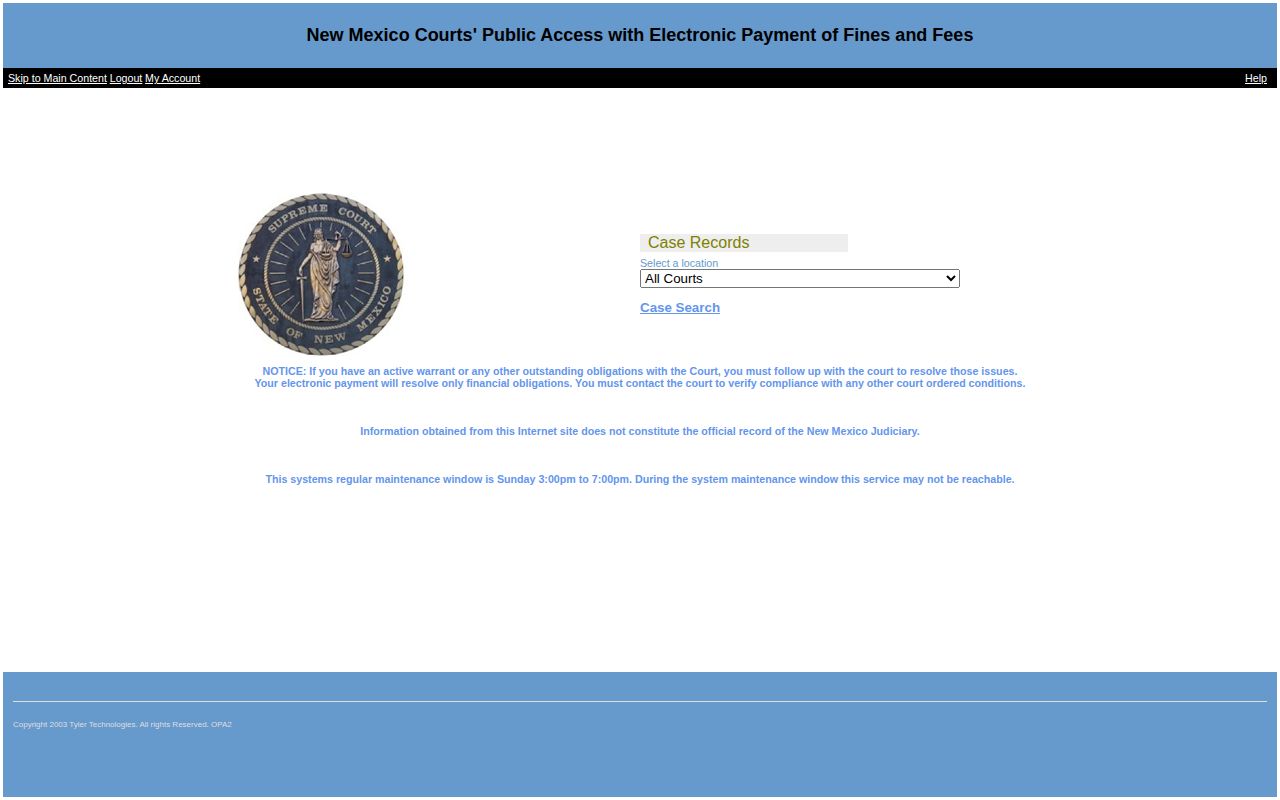
The New Mexico Courts Public Access portal and Case Lookup tie a name or case number to filings, hearings, and a later disposition. They are not jail rosters. Case Lookup may omit documents. Juvenile cases may be missing too. The court tells users to follow up with the clerk. The portal's front page shows its case-search entry point and disclaimer. Use the court's current interface for case access. Ask the clerk for a certified filing or disposition when one is needed.
A state sentence or state supervision calls for the NMCD offender search. Adult prison data updates overnight, and NMCD asks users to allow up to a day. Probation and parole data is described as real-time. Confirm location and legal status with the institution or supervising office. NMCD has no control over county detention.
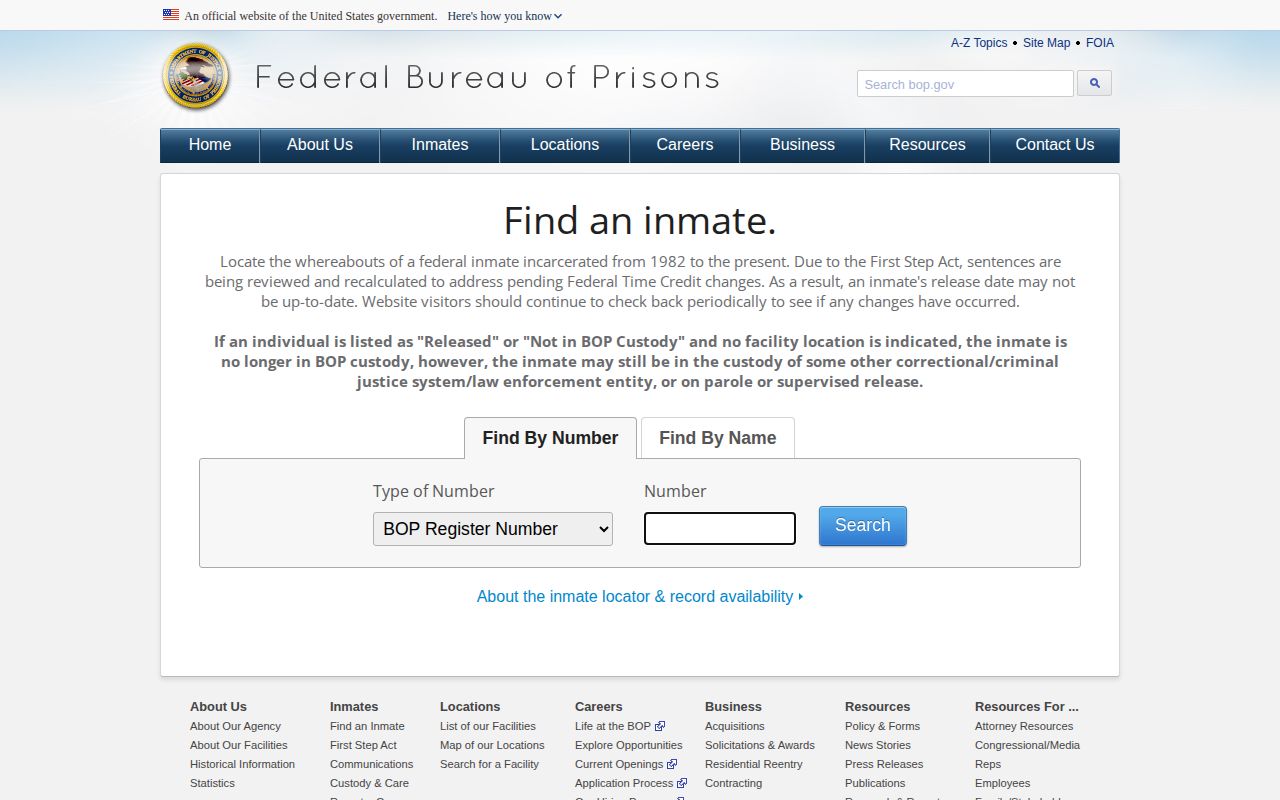
The Federal Bureau of Prisons locator covers federal custody. It generally reaches BOP records from 1982 forward. It offers no public booking-photo source. Its name and register-number search makes the federal scope clear. It is a custody tool, not proof that no other agency holds a person. ICE's locator and DHS-VINE are separate immigration systems. A county arrest, a state prison record, a federal prisoner, and an immigration detainee are not one search result.
| Status | Where the record usually sits | What a reader should verify |
|---|---|---|
| Just booked | Receiving county or city detention system | Booking number, date, current status, and the source’s last-update label. |
| Still in local custody | Current jail roster or direct facility confirmation | Whether the listing is current and whether a transfer is pending. |
| Released from local custody | Past booking record, release list, arresting agency, or court | A missing current roster entry does not erase the booking record. |
| Sentenced or supervised by the state | NMCD offender search or supervising office | State custody is distinct from a county jail stay. |
| Federal or immigration custody | BOP, USMS, ICE, or DHS-VINE, depending on the case | Each system has a separate scope and may not share booking photos. |
Note: A roster that no longer shows a person may reflect release or transfer, not correction or destruction of the underlying record.
When New Mexico Arrest Records Age
No single rule ages a New Mexico arrest record. Every booking file sits on its own clock. State schedules sort records by series, agency, trigger, and final disposition, which means two arrests can carry very different timelines. Some central criminal-reporting and fingerprint series get long periods under the state schedule. That says nothing about county photos. A county need not keep every booking image online for the same span, and local schedules and agency file plans control the record at issue.
Rosters can be fickle. One disappears while its booking sheet stays alive in a record system. The reverse happens too. A web page can outlast a record the custodian has already changed. Ask the agency which approved series applies, what event starts the retention clock, and whether a hold or court order affects the file. A broken link is not proof of destruction. Nor is a blank search result.
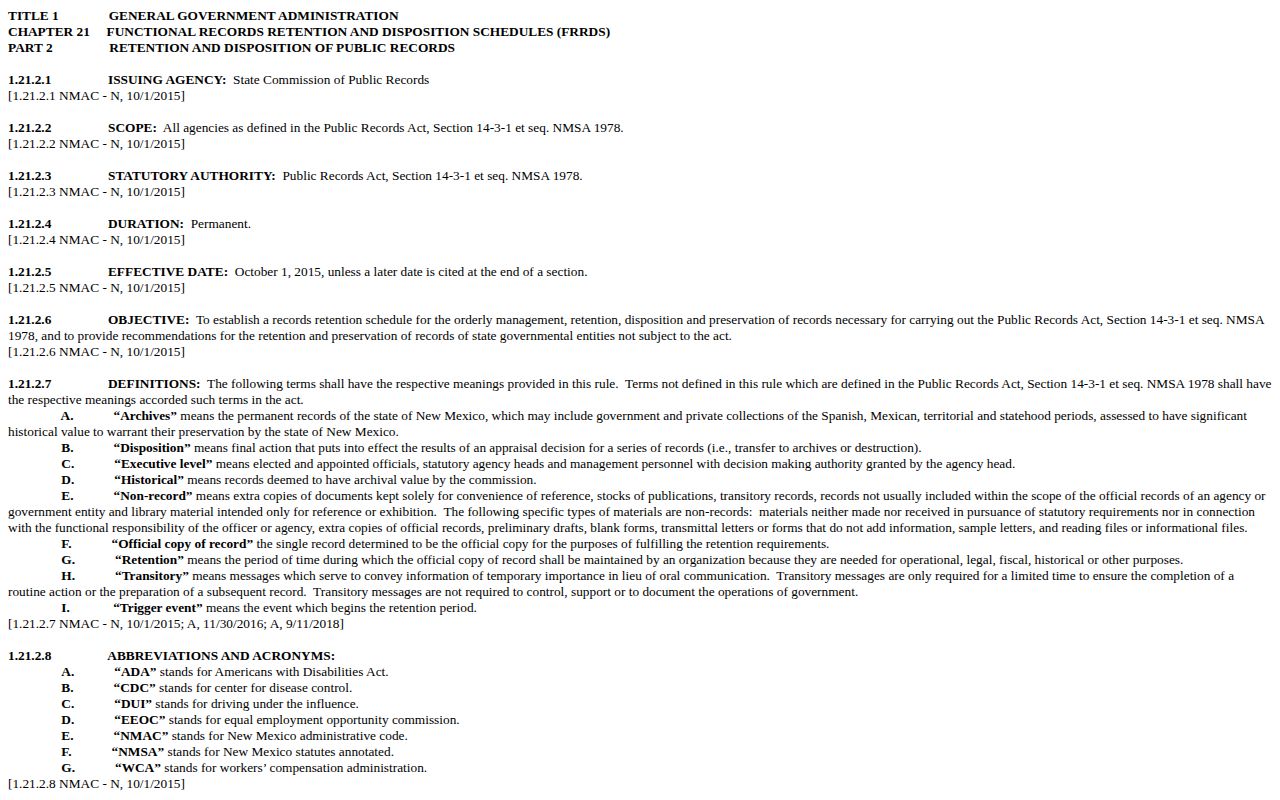
The New Mexico records schedule sets out its own scope and definitions, and the local-government schedule stands separate. Its page displays the retention categories by series, not a universal rule for county booking photos.
Old government records live in the archive. For historical material, the New Mexico State Records Center and Archives Heritage Search is the place to start. Ask about access and reproduction before you go. A transferred historical collection is not a live booking feed, and a public copy may need extra care if the record was later sealed or expunged.
Secondary New Mexico Arrest Sources
Commercial sites can speed up discovery. They are not government records. RecentlyBooked's New Mexico section covers only part of the county landscape. It also warns that update timing varies. Mugshots.com's New Mexico archive is historical. BustedNewspaper, Arrests.org, and Mugshots.zone hold state and county material too. Their coverage, freshness, and correction practices differ from site to site.
A secondary page is often a copy. It may have been lifted from a sheriff or clerk page. Later it can drift from its source date. The copy might show old charges, merge separate arrest events, omit the disposition, or survive after the official record changes. Check the event with the receiving jail, the arresting agency, or the court. Do that before you rely on it. No third-party page replaces a current custody confirmation.
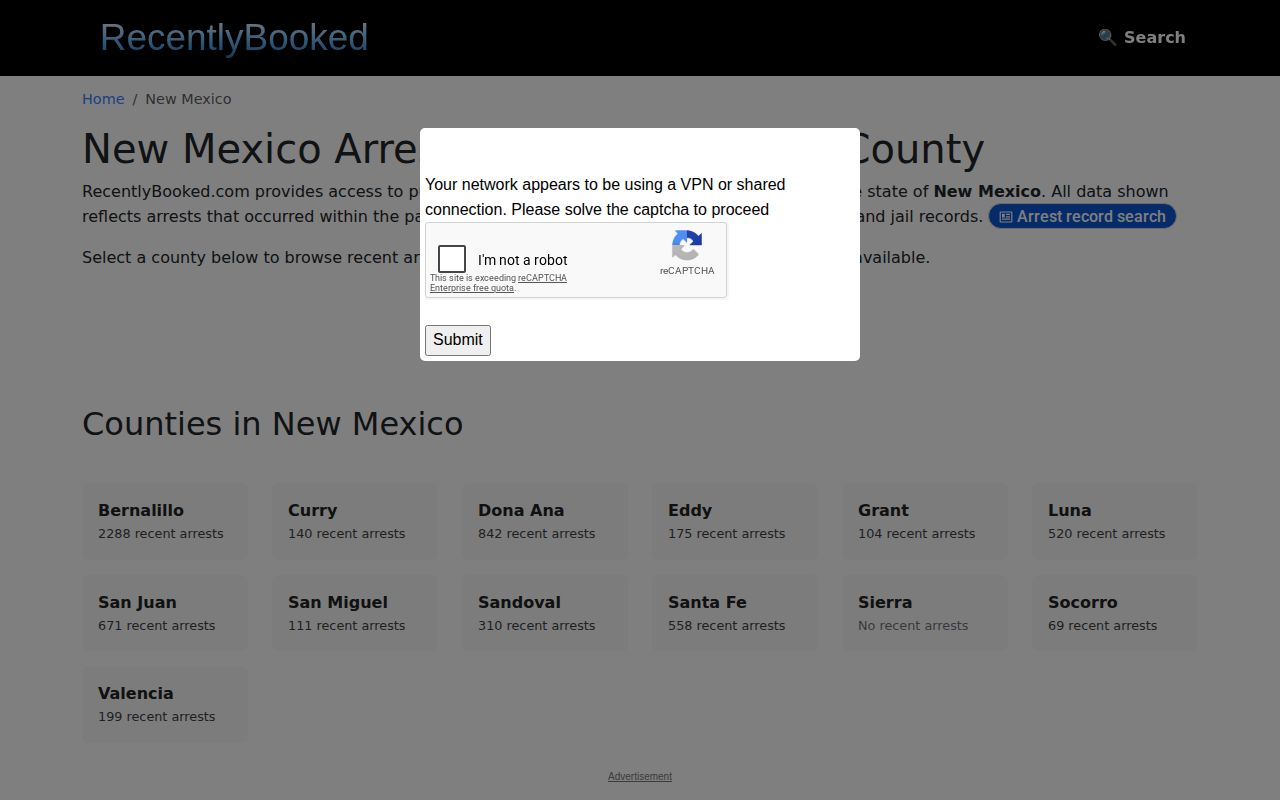
The publisher's New Mexico landing page shows one county-index approach in action. Think index, not roster. Its state list is not a full New Mexico roster. A challenge screen or a missing county should never be read as an arrest count.
Do not treat a search result as proof of guilt. The state’s own sources and the later court disposition should control the account of an arrest. This site does not reproduce booking images, and an absent official photo should not be filled with a publisher’s copy.
New Mexico County Arrest Search
Begin with the county of booking, not the county where a news story spread. Albuquerque and other cities can arrest someone who is then booked at a county detention center, and state police may deliver a person to whichever county or municipal facility accepts the booking. Unsure of the spot? The arresting agency's release or report names the receiving custodian. The statewide court portal can locate a later case, but it will not locate a live jail cell.
Rural, request-first counties deserve the same clean route as portal counties. Where a county posts no public roster, check its detention page, sheriff's office, records custodian, or court clerk. Ask how to file an IPRA request. A missing website never means zero arrests. Use the County Directory in the top navigation to pick the right locality site and continue to its official sources.
A blank roster has many explanations. It may show current custody only. A release, a page outage, a search mismatch, or the lack of a public feed can each leave the list empty. None of it settles whether an arrest happened. Confirm with the agency that handled the event.
- Arrest
- A law-enforcement event or legal status, not proof of the alleged conduct.
- Booking
- The receiving facility’s intake and identification process.
- Custody
- A current detention or supervision status that can change after release or transfer.
- Blotter
- A chronological activity record, not necessarily a full case file or roster.
- Disposition
- A court or prosecution outcome such as dismissal, diversion, acquittal, or conviction.
- Expungement
- A court-ordered process that seals eligible records under New Mexico law.
A New Mexico booking entry lists the charge as filed on the day of arrest. The court record carries the story from there.