
New Mexico State Police Arrests
NMSP stands for New Mexico State Police. It is the state's own law-enforcement agency, with a role that spans all of New Mexico. Four branches do the work. They are Uniform, Investigations, Special Operations, and Commercial Vehicle Enforcement. Twelve districts appear on the leadership and annual-report page. Patrol activity, investigations, commercial traffic, fugitive work, and major incidents all surface in the news. That breadth shapes a public NMSP arrest report. It may read as an event release, an enforcement result, or part of a larger incident story. A release is not a booking entry. It may name an arresting district or describe an operation without listing every person arrested. The NMSP home page identifies the agency and its main public sections.
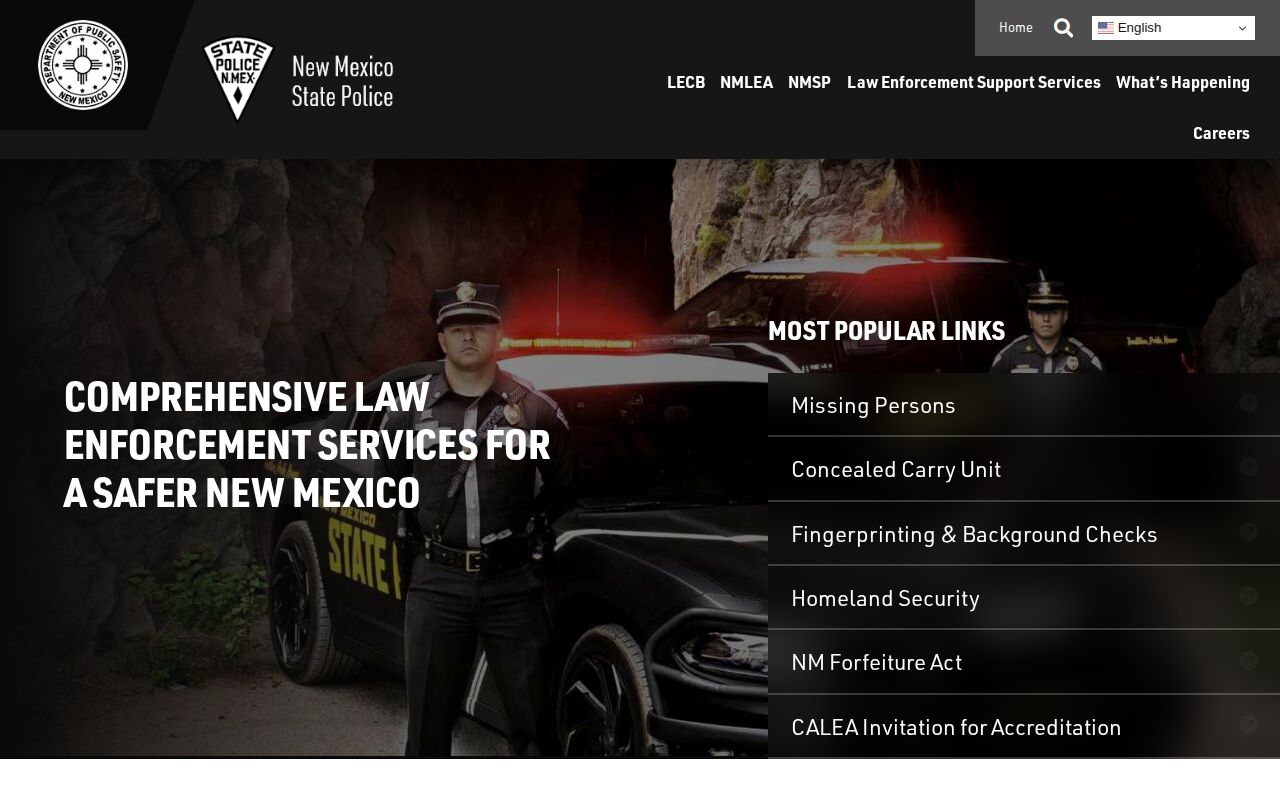
This page points to the agency's own sources, not a live booking roster or mugshot search.
New Mexico State Police Arrest News
The best starting point for current statewide arrest and enforcement releases is the DPS Public Information Office. Older NMSP releases can also be found in the DPS press archive. The official NMSP site and its DWI page add context, but they do not create one complete stream of every arrest. These sources should be read by their stated purpose and publication date.
| Official channel | What it can show | Limit |
|---|---|---|
| DPS PIO News Releases | Statewide DPS and NMSP news, including arrests, investigations, public-safety alerts, and enforcement activity. | Selective news releases, not a daily list of every person arrested. |
| NMSP press archive | Older NMSP releases that can add archive depth to a search. | An event archive does not show all bookings or current custody. |
| NMSP DWI Prevention page | Checkpoint and prevention context, including work with state and local partners. | It is not a searchable list of DWI arrests. |
The DPS PIO entry page groups releases under an agency label with dated headlines.
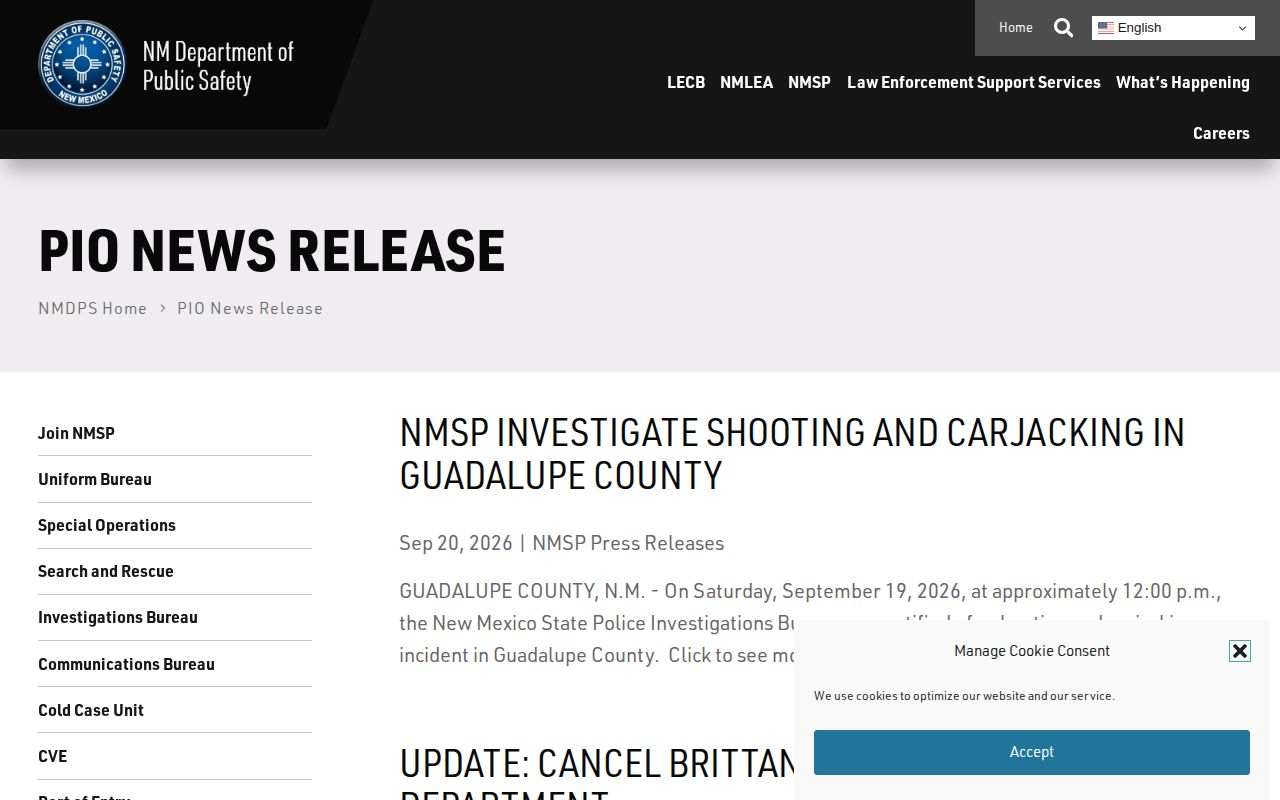
Treat each release as an event report. Custody and case details belong to the agency that holds those records, so confirm there before relying on a headline.
Selective New Mexico Police Arrest Reports
NMSP publishes no daily person-level arrest roster. No booking-photo database appears on its official pages. A statewide dispatch log appears nowhere in its official pages either. Its news releases are episodic. A missing-person alert, a fugitive apprehension, or a DWI campaign can fill the next one. Quiet absence proves little. A person absent from the page may still have been arrested by NMSP. The archive helps in a different way. It shows when the agency reported a given event or enforcement action. One release may list several stops and citations beside a single arrest. Routine cases get skipped. A 2023 McKinley County release, for instance, described a weekend crackdown. The focus was DWI and dangerous driving. The NMSP press archive lets readers browse older event coverage. Each item keeps its date and source attached, since a release can be corrected later.
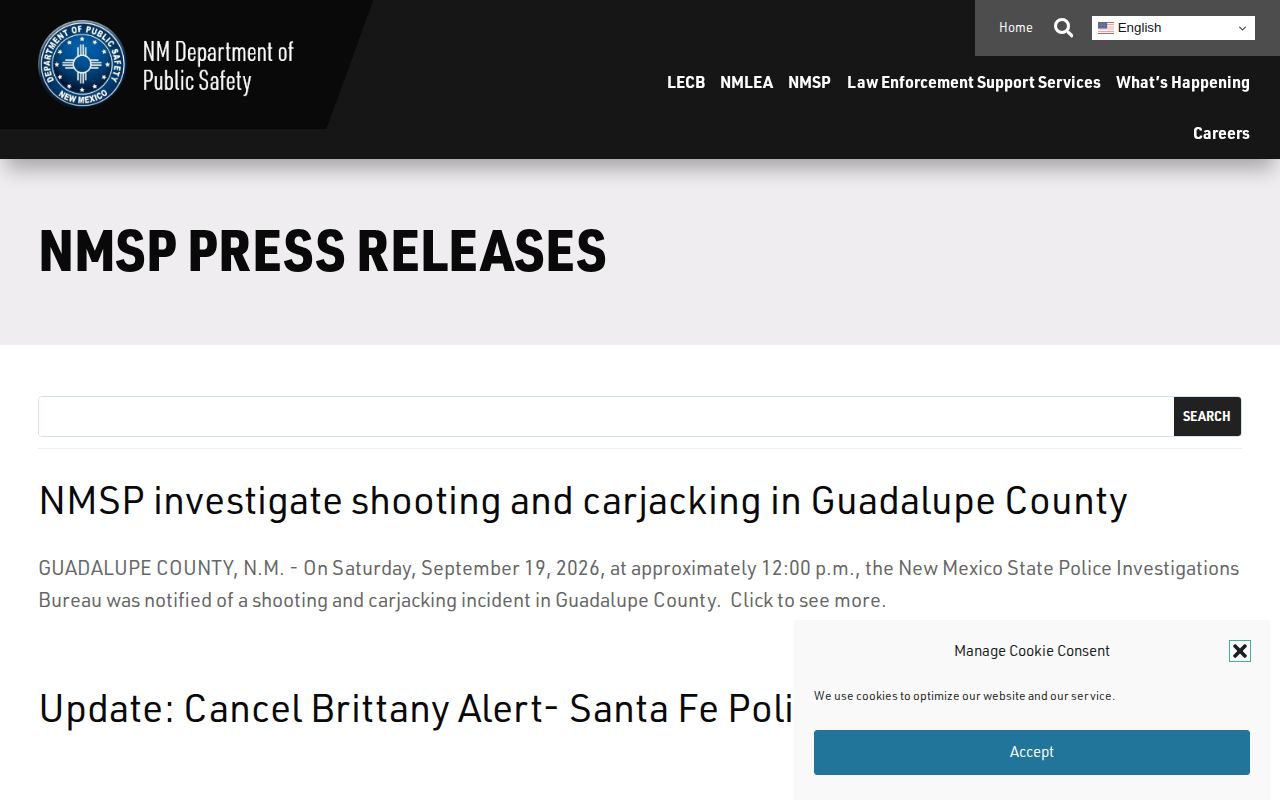
Dated headlines help you locate a specific release. It is not a booking list. Note: A news release may name a charge that a court record later changes or dismisses.
Trace a New Mexico State Police Arrest
Work in order once you have a name or incident. The press channel may hold a public statement about the arrest. The receiving detention facility holds the booking record. The court holds what happens next. A person may be cited and released, booked and released, or transferred before any roster check.
- Search the DPS PIO releases and NMSP press archive by name, county, incident, or approximate date.
- Read the release for the event location, arresting unit, and any receiving facility it identifies.
- Check the appropriate county or municipal detention roster for the booking and current custody status.
- If the booking is not listed, call the facility or ask DPS which jail accepted the person.
- Request the NMSP report from DPS when a release is not enough to answer the question.
The New Mexico County Directory routes each search to its local county site. A jail roster or records contact lives there. The Police Blotter page covers the state's multi-day publication landscape. It explains how event releases differ from booking logs.
Where New Mexico State Police Arrestees Book
NMSP arrests people. It does not jail them. The agency has no statewide lockup of its own. After an arrest, the person goes to a county or municipal detention facility. Whichever one accepts the booking takes them in. Jurisdiction, the offense, custody needs, and local arrangements all shape that choice. No rule sends every NMSP arrestee to one named jail. The right facility varies by county and case. Keep three records separate: the release, the jail entry, and the court case. A press item may post before the jail finishes intake. The roster may show a booking number, custody status, bond, or photo. What appears depends on policy and system. The docket may later add a case number, hearing, or disposition. One layer's fields never guarantee another's.
Start with the receiving facility. Ask NMSP or the arresting district which detention center took the booking. Then check that roster or records desk. A county booking photo, when lawfully displayed, belongs to the local system.
Sentencing changes the picture. A person headed to state prison moves into the NMCD Offender Search. Probation and parole supervision shows up there too. That tool does not cover a fresh county detention stay, though. It also cannot stand in for a local booking source.
Request a New Mexico State Police Report
DPS holds several arrest-related files. Incident reports, arrest reports, booking records, audio, video, and Computer Aided Dispatch entries all exist. Every one of them starts at the same place. Open the DPS Public Information page, then file through the Records Request / IPRA portal. A narrow ask travels faster. Name NMSP plus the district or case number if known. Give the incident or booking date, and state the record type. Request electronic copies. Also ask for any non-exempt portions that staff can separate from withheld material.
- Choose the NMSP or DPS record path and state the date range and event location.
- Name the report, booking record, photograph, dispatch entry, audio, or video sought.
- Include a case number or district if known, and ask for electronic delivery when available.
- If a record is withheld, ask for the specific legal basis and any segregable public part.
The Inspection of Public Records Act drives every response. A custodian must reply immediately or as soon as practicable. The outside framework is fifteen calendar days. An agency may fall short of three business days. In that case it should explain when to expect an answer. Redaction, consultation, and complex retrieval can stretch the wait. Inspection itself is free; agencies may charge reasonable copy or storage costs. The state framework changed in 2025, so reconfirm fees at request time. Follow the current New Mexico Department of Justice IPRA guidance.
Frame the request tightly. Give a bounded date range and the event location. Then name the record type: incident report, supplement, dispatch entry, audio, or video. A short time span helps staff find the file. It also keeps anyone from mining the press archive as a database. IPRA requires no stated reason. Keep the acknowledgment, any invoice, the response, and your request text together. A later follow-up then points to the same record.
The portal is a submission path, not a promise. Some reports and images stay non-public. Juvenile detention records carry separate limits under the Children's Code. Confidential sources or methods and certain uncharged-person details may be withheld or redacted too. DPS may deny part of a request. In that case, ask for the exact legal basis, the withheld category, and any segregable portions. A proper denial cites law, not a broad privacy label.
New Mexico Police Arrest Report Fees
Two DPS paths serve two purposes. A report request goes through IPRA. A personal criminal-history check goes elsewhere. The Law Enforcement Records Bureau (LERB) is the route for your own repository record under Section 29-10-6 of the Arrest Record Information Act. It does not return every county booking or citation. It is not an open lookup on another person either.
| Record path | How it works | Fee or scope |
|---|---|---|
| Public NMSP incident or arrest file | Submit an IPRA request through DPS GovQA with agency, date, event, and record type. | DPS lists no fee for electronic records through the portal. Physical copies may be billed under the current schedule. |
| Own DPS repository record | Send a complete, legible, notarized DPS Authorization for Release form with an original signature to LERB. | $15 by money order or cashier's check payable to NM DPS; covers the requester's own repository record. |
| Crash or motor-vehicle records | Ask LERB for the applicable uniform crash or highway record path and confirm the series. | Published copy examples are $1 for the first physical page, 25 cents each added page, and $6.75 for a disc. |
The $15 own-record process sits apart from an IPRA request for an incident file. DPS describes the repository as fingerprint-based. It covers felony arrests, qualifying misdemeanors, and DWI arrest information. It is not a complete list of local bookings. Unprinted traffic citations stay out too. The LERB page posts the authorization form and current instructions. Confirm the fee and accepted payment before mailing anything.
NMSP and LERB also handle uniform crash reports plus some motor-vehicle and highway records. The cited NMSP crash schedule gives retention examples. Fatal crashes run 25 years. Nonfatal crashes run 10 years, under 1.21.2.927 NMAC. Those numbers apply to that crash series alone. They do not govern every NMSP arrest report, roster entry, or booking photo.
Note: A repository check, an incident file, a crash report, and a county booking record each answer a different question.
New Mexico State Police Arrest Districts
New Mexico State Police runs twelve districts. The NMSP leadership and annual-report page names them. It also names the Uniform, Investigations, Special Operations, and Commercial Vehicle Enforcement functions. A district named in a release works as a routing clue for a report request. It will not identify the jail. Nor will it name the court or record custodian for every part of an event.
The DWI Prevention page describes checkpoints across New Mexico communities. These come especially on dangerous holiday weekends. Partners include the Department of Transportation, the Governor, and local law enforcement. The press archive holds checkpoint and saturation-patrol reports. Some list stops, citations, or an operation's arrest count. Those figures belong to that named effort and date alone. They do not form a daily list of everyone arrested statewide.
The official DWI page lays out the agency's prevention work and partner role.
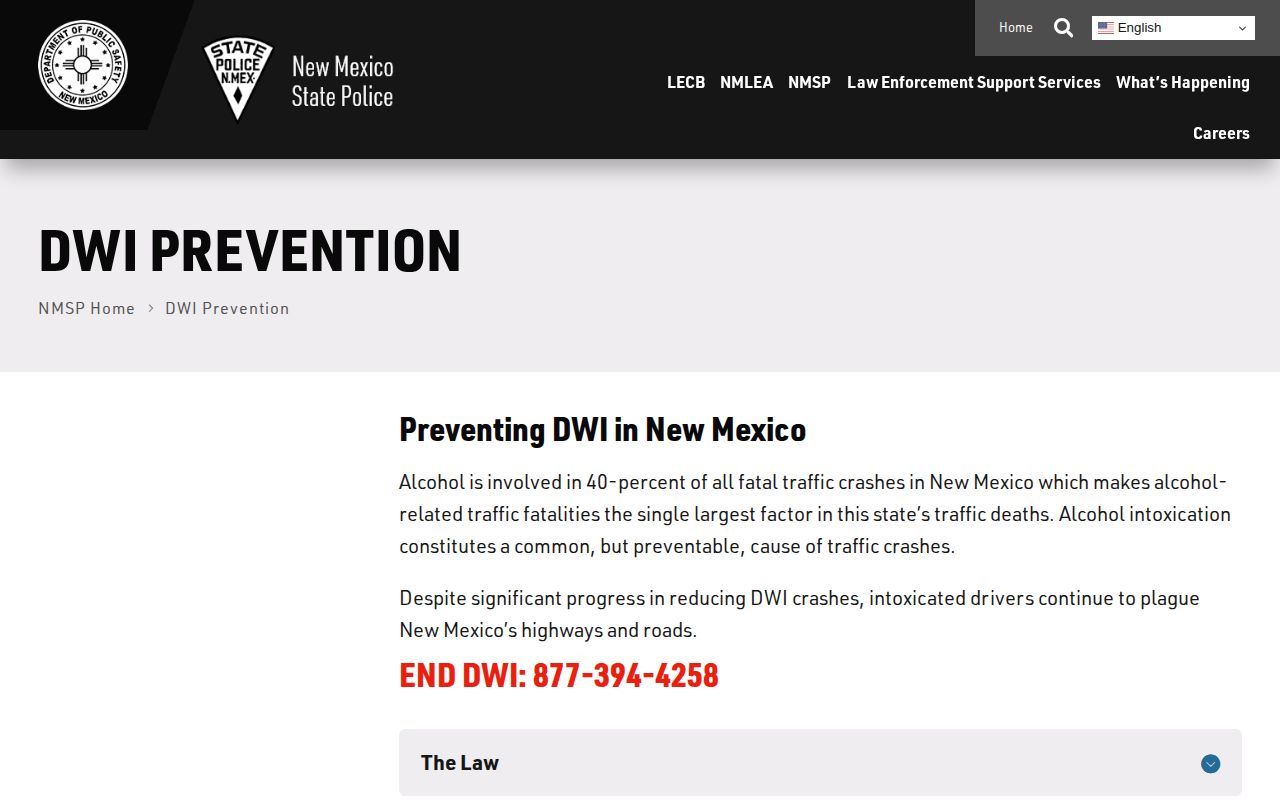
Check the linked page for current program details. For a specific arrest, use the local jail or the DPS record route.
A public release is one piece of the trail. The receiving jail confirms custody and booking. DPS holds the NMSP report. The court tracks later case events.